Build Thread 1956 CJ5 - About to start digging into hit
samalex
Jeeper
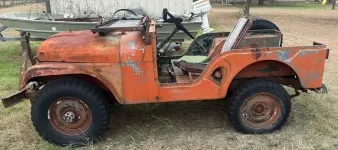
Back story, my dad bought this 1956 Jeep CJ5 in high school back in the late 60's, he the second owner, and he drove it through college. During the late 70's and early 80's he let my uncle borrow it who just had it at a deer lease, and mid 80's we moved out to the country, and my dad brought it back home. Me and my younger brother learned to drive on this Jeep, and we'd drive it just round the back roads and through the fields in late 80's and early 90's. But by late 90's I was in college and my brother in high school, so the Jeep got parked in a field. My dad would drive it around just to mow under it, but it basically has sat for better part of 25 years. It used to be under a tarp, but that tarp rotted away years ago.
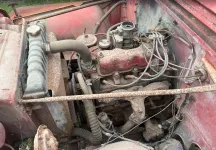
So now my 15 year old son and I would like to get it going again, and I honestly would like to use it as a daily driver just around town - though I understand this would be WAY down the road. It's all original as far as I know with the original F134 Hurricane Hurricane engine. My dad said he's rebuilt the carbonator twice from what he remembers, but outside of that it's mostly as it was 30 years ago. Last time plates were registered was 1987.
Engine doesn't seem to be ceased up, I can turn the fan with little issue, but I'm unsure of the state on everything else. For now, my goal is to keep it as original as possible, keeping the 6v generator, drum brakes, etc -- mostly because I'm no mechanic and this is all totally new to me. What I know is from reading some manuals and watching HOURS of YT videos watching others go through these steps.
I'll post some things here as I go, but here's my basic plan -- though I'd LOVE feedback. I'm breaking it up into a few phases - Engine, Cooling and Fuel, Transmission , Brakes, Electrical, Suspension, Cabin, then Body, maybe not exactly in that order.
First is to just ensure the engine is sound... next time I'm out at my dads I'll spray some Kroil or similar into the cylinders just to help it soak in and I'll drain the engine oil and hope there's no water or rust in it. If so may need to pull the oil pan and clean it. After this fill it back up try to turn it over and do a compression test. Can someone tell me what PSI I should look for? I'm thinking over 100, but I'm not sure. Or is it okay to do a compression test with any oil in it? I've read it's not good to circulate the sludgy oil back through it.
If this is good, then rebuilding carburetor and distributor, the repair kits together are about $90. If compression is poor may need to pull the head and order a head gasket which is about $70 in of itself. Trying not to drop too much into it until I can ensure the engine and transmission are sound. But if this gets the engine going then focusing on getting the gas tank in good shape and rebuild or replace the fuel pump. I don't think it has a fuel filter, so may add this too. And then radiator and water pump working.
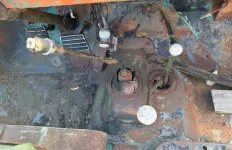
I don't want to assume any of this will function after sitting so long, but maybe it will just to get it running. For now first goal is to just to get the engine running on its own enough to move it and test the transmission. I'll drain the transmission fluid as well and hope for no water or rust, but if this is clear is there any other way to test transmission other than driving it?
My hope is to get through this with no big gotchas -- if so then just start checking things off the list. I have a lengthy Google Sheet going with all the stuff to tackle, but of course each is hinged on the bigger things working.
As I said I'm no mechanic, so I'll be doing this all through research and questions - so thanks in advance for any help you all are able to give.


So now my 15 year old son and I would like to get it going again, and I honestly would like to use it as a daily driver just around town - though I understand this would be WAY down the road. It's all original as far as I know with the original F134 Hurricane Hurricane engine. My dad said he's rebuilt the carbonator twice from what he remembers, but outside of that it's mostly as it was 30 years ago. Last time plates were registered was 1987.
Engine doesn't seem to be ceased up, I can turn the fan with little issue, but I'm unsure of the state on everything else. For now, my goal is to keep it as original as possible, keeping the 6v generator, drum brakes, etc -- mostly because I'm no mechanic and this is all totally new to me. What I know is from reading some manuals and watching HOURS of YT videos watching others go through these steps.
I'll post some things here as I go, but here's my basic plan -- though I'd LOVE feedback. I'm breaking it up into a few phases - Engine, Cooling and Fuel, Transmission , Brakes, Electrical, Suspension, Cabin, then Body, maybe not exactly in that order.
First is to just ensure the engine is sound... next time I'm out at my dads I'll spray some Kroil or similar into the cylinders just to help it soak in and I'll drain the engine oil and hope there's no water or rust in it. If so may need to pull the oil pan and clean it. After this fill it back up try to turn it over and do a compression test. Can someone tell me what PSI I should look for? I'm thinking over 100, but I'm not sure. Or is it okay to do a compression test with any oil in it? I've read it's not good to circulate the sludgy oil back through it.
If this is good, then rebuilding carburetor and distributor, the repair kits together are about $90. If compression is poor may need to pull the head and order a head gasket which is about $70 in of itself. Trying not to drop too much into it until I can ensure the engine and transmission are sound. But if this gets the engine going then focusing on getting the gas tank in good shape and rebuild or replace the fuel pump. I don't think it has a fuel filter, so may add this too. And then radiator and water pump working.
I don't want to assume any of this will function after sitting so long, but maybe it will just to get it running. For now first goal is to just to get the engine running on its own enough to move it and test the transmission. I'll drain the transmission fluid as well and hope for no water or rust, but if this is clear is there any other way to test transmission other than driving it?
My hope is to get through this with no big gotchas -- if so then just start checking things off the list. I have a lengthy Google Sheet going with all the stuff to tackle, but of course each is hinged on the bigger things working.
As I said I'm no mechanic, so I'll be doing this all through research and questions - so thanks in advance for any help you all are able to give.