225 sharing parts on 231
FNG here on this forum. I have had a mostly stock 68 CJ5 with 225 V6 for a while now that I am currently swapping over to a 231 so I can take my time and rebuild the 225 and still have my Jeep running while I do it. This week is the first time in years my Jeep is down for repairs. My Jeep is a work horse and not a show queen. I started this swap process about four years ago and life had gotten in the way until now.
What I have is a 1975 231 odd fire that I have rebuilt. It is .030" overbore, crank ground .010", RV cam, stock style pistons, double roller timing chain, .090" shim lift on rocker shaft supports with new length push rods for proper rocker angles on valves. ...nothing special. I don't want to run the 231 intake as I don't have a carburetor for it and it has all the EGR on it. Also the front cover is trash on the 231 and has the wrong oil pump orientation. My plan is to run the like new cover that is currently on my 225 and swap the intake and flywheel as well. The front cover should be a direct swap over. The intake will not be a direct swap as the exhaust cross over ports are different and the 231 heads have a void near those ports at the mating surfaces that will not allow a good seal of the intake gasket around those ports with mismatched parts.
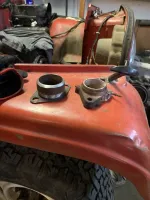
The 231 port gasket surface is a square with a clipped corner and the 225 gaskets are the full square. 225 gaskets leave a hole from that port into the void on the head and out to the air. The 231 gaskets will seal the port on the head side but leave an unsupported gasket into the exhaust port of the 225 intake so a leak will occur there as well.
What I have done to remedy this is block the ports in the head altogether. The 231 ports are a rounded hole about 5/8" diameter cast on an angle to the mating surface. I rounded the edges of the holes and drove freeze plugs into the holes and peened the casting to hold them in place. In my experience those exhaust ports always carbon over and plug up and I have never seen any adverse effects on my engines when they are plugged even with the butterfly valve still in the right side exhaust manifold. My 225 intake had carbon plugged ports and the 231 was plugged on one side.
My plan is to eliminate the butterfly valve in the right side exhaust manifold just to get rid of it as mine has a cracked housing and I'm unsure if it operates correctly anyway.
I want to keep the engine looking as close to a 225 as I can as it might be a while before that old 225 gets rebuilt again. My plan for it is to rebuild it with a cam and better fuel system. The current 225 was rebuilt not that many miles ago but many years ago by a crappy engine builder. It went to be rebuilt again after the oil pump was not changed on the first rebuild and had to go back a third time for the heads to get done again. All the years I have owned it the heads have been an issue as I believe the rocker arm to valve angle is way off pushing sideways on the valves and wearing the guides. I will be tearing into that engine soon and confirming what I am sure is happening. Plus I want to see what else is worn or incorrect from that last rebuild by the idiot shop. In a perfect world the bottom end will still be good and all I will have to do is the heads and update the cam. I run an Overdrive unit and the cam will help me with torque when traveling down the highway.
Has anyone else tried to morph the 225 and 231 together?
Skidding logs a few years ago...

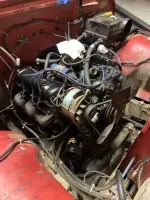
Current 225 about to be pulled out....

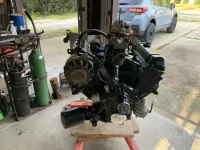
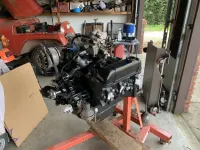
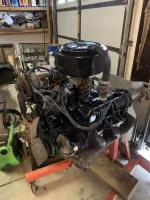
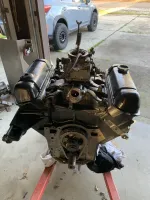
231 with 225 intake installed..... I removed it again to swap gaskets and plug those ports. You can see those voids in the heads at the centers where the intake gasket is visible...the holes are now plugged waiting on the new gasket.

When the gasket gets here I will install the intake again and then I will pull the front cover off the 225 and clean it up, rebuild the oil pump, and attach it to the 231. I have a fairly new water pump on the cover already. Once all the easy parts are swapped over I will pull the 225 out of the Jeep and finish the swap. I am also going to rebuild the steering box and apply some ceramic coating on the firewall and floor boards to help slow heat transfer into the cab before setting the 231 in place.
What I have is a 1975 231 odd fire that I have rebuilt. It is .030" overbore, crank ground .010", RV cam, stock style pistons, double roller timing chain, .090" shim lift on rocker shaft supports with new length push rods for proper rocker angles on valves. ...nothing special. I don't want to run the 231 intake as I don't have a carburetor for it and it has all the EGR
on it. Also the front cover is trash on the 231 and has the wrong oil pump orientation. My plan is to run the like new cover that is currently on my 225 and swap the intake and flywheel as well. The front cover should be a direct swap over. The intake will not be a direct swap as the exhaust cross over ports are different and the 231 heads have a void near those ports at the mating surfaces that will not allow a good seal of the intake gasket around those ports with mismatched parts. The 231 port gasket surface is a square with a clipped corner and the 225 gaskets are the full square. 225 gaskets leave a hole from that port into the void on the head and out to the air. The 231 gaskets will seal the port on the head side but leave an unsupported gasket into the exhaust port of the 225 intake so a leak will occur there as well.
What I have done to remedy this is block the ports in the head altogether. The 231 ports are a rounded hole about 5/8" diameter cast on an angle to the mating surface. I rounded the edges of the holes and drove freeze plugs into the holes and peened the casting to hold them in place. In my experience those exhaust ports always carbon over and plug up and I have never seen any adverse effects on my engines when they are plugged even with the butterfly valve still in the right side exhaust manifold. My 225 intake had carbon plugged ports and the 231 was plugged on one side.
My plan is to eliminate the butterfly valve in the right side exhaust manifold just to get rid of it as mine has a cracked housing and I'm unsure if it operates correctly anyway.
I want to keep the engine looking as close to a 225 as I can as it might be a while before that old 225 gets rebuilt again. My plan for it is to rebuild it with a cam and better fuel system. The current 225 was rebuilt not that many miles ago but many years ago by a crappy engine builder. It went to be rebuilt again after the oil pump was not changed on the first rebuild and had to go back a third time for the heads to get done again. All the years I have owned it the heads have been an issue as I believe the rocker arm to valve angle is way off pushing sideways on the valves and wearing the guides. I will be tearing into that engine soon and confirming what I am sure is happening. Plus I want to see what else is worn or incorrect from that last rebuild by the idiot shop. In a perfect world the bottom end will still be good and all I will have to do is the heads and update the cam. I run an Overdrive unit and the cam will help me with torque when traveling down the highway.
Has anyone else tried to morph the 225 and 231 together?
Skidding logs a few years ago...

Current 225 about to be pulled out....
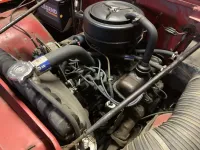
231 with 225 intake installed..... I removed it again to swap gaskets and plug those ports. You can see those voids in the heads at the centers where the intake gasket is visible...the holes are now plugged waiting on the new gasket.
When the gasket gets here I will install the intake again and then I will pull the front cover off the 225 and clean it up, rebuild the oil pump, and attach it to the 231. I have a fairly new water pump on the cover already. Once all the easy parts are swapped over I will pull the 225 out of the Jeep and finish the swap. I am also going to rebuild the steering box and apply some ceramic coating on the firewall and floor boards to help slow heat transfer into the cab before setting the 231 in place.